A Piece of Roger’s Music Lives On: Kenton ’58 at Keesler
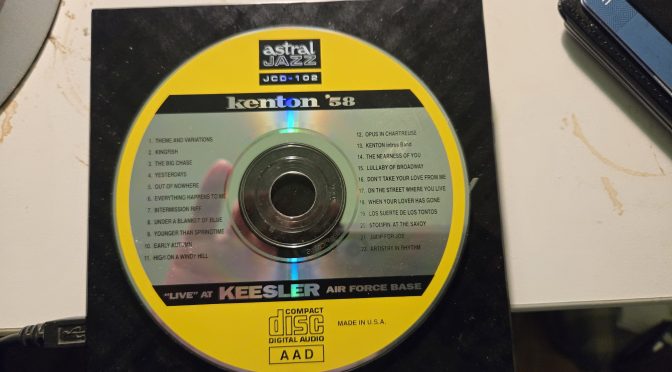
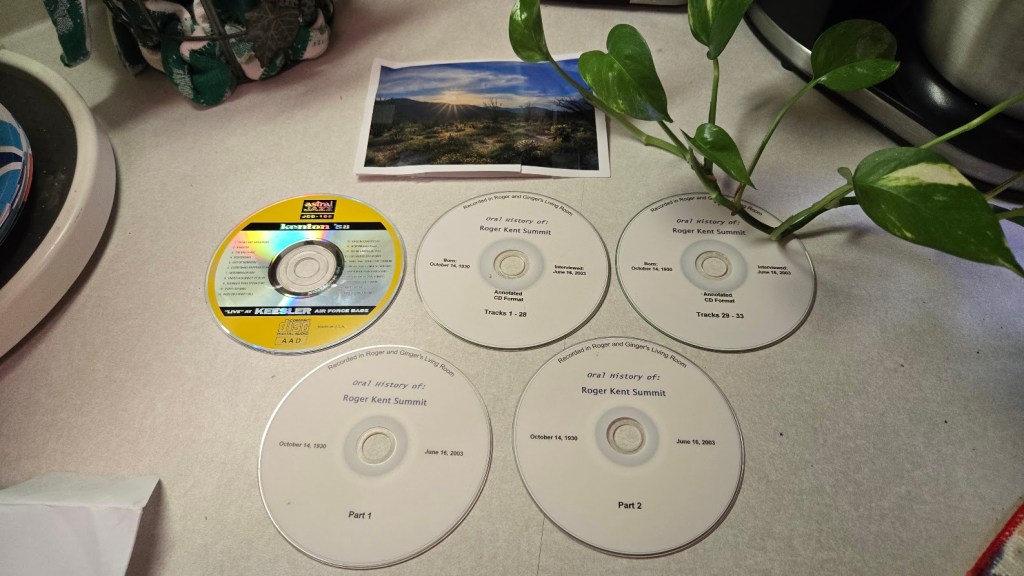
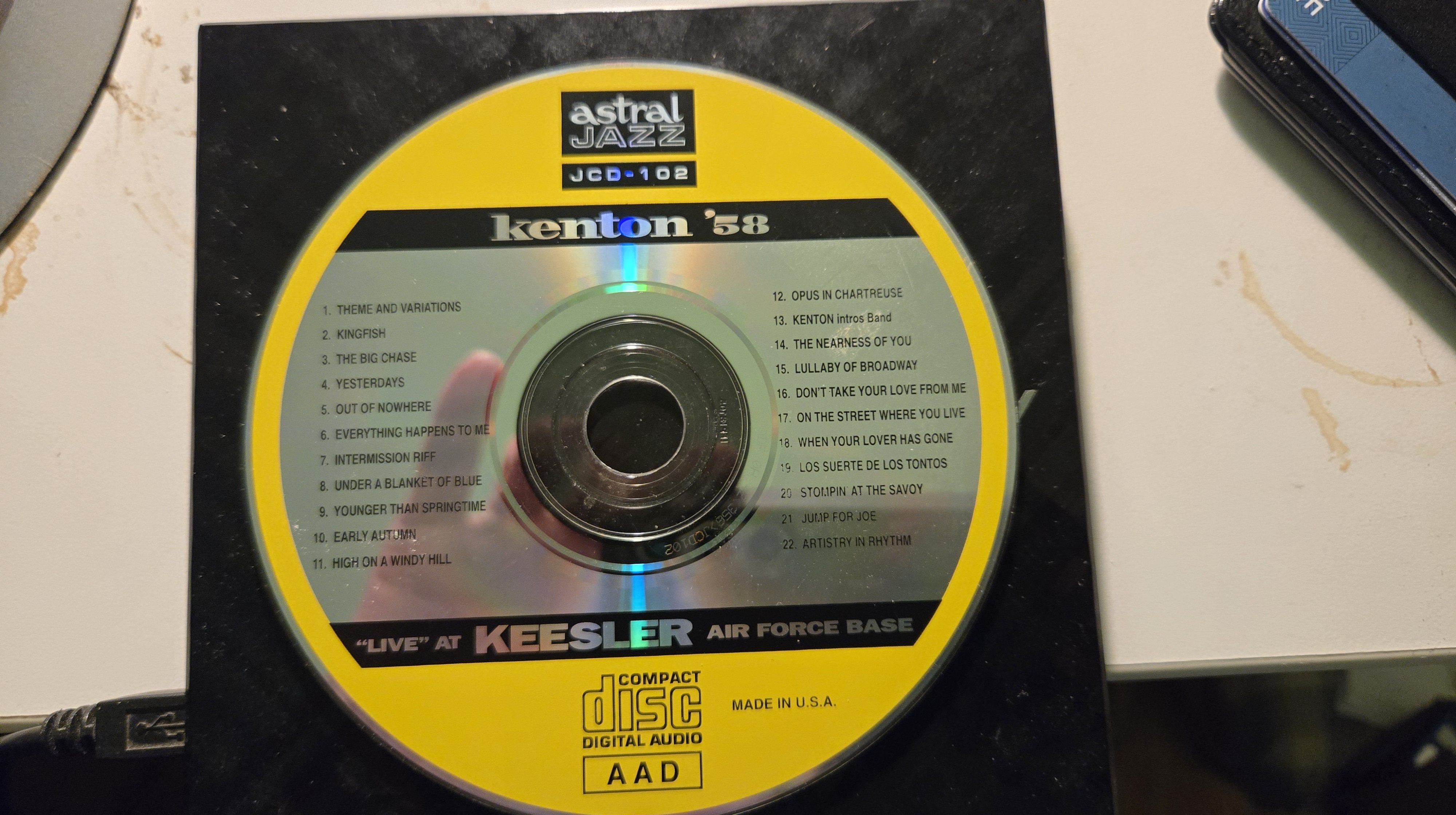
Among Roger’s belongings, his wife Ginger found a CD that clearly meant something to him — a live recording of Stan Kenton and His Orchestra, captured on November 11, 1958, at Keesler Air Force Base. Ginger generously donated the disc to DIALOG-X so it could be preserved and shared as part of Roger’s memory.
The recording, released commercially in 1997 on the Astral Jazz label as Kenton ’58: “Live” at Keesler Air Force Base (JCD-102), captures Stan Kenton’s big band jazz orchestra in full force — a mix of Kenton originals, standards, and arrangements from some of the era’s finest jazz composers and arrangers.
The Full Program:
Theme and Variations
Kingfish
The Big Chase
Yesterdays
Out of Nowhere
Everything Happens to Me
Intermission Riff
Under a Blanket of Blue
Younger Than Springtime
Early Autumn
High on a Windy Hill
Opus in Chartreuse
Kenton Introduces Band Members
The Nearness of You
Lullaby of Broadway
Don’t Take Your Love From Me
On the Street Where You Live
When Your Lover Has Gone
La Suerte de los Tontos
Stompin’ at the Savoy
Jump for Joe
Artistry in Rhythm
If you’d like to hear this recording for yourself, copies are available through Amazon, eBay, and dealers specializing in Stan Kenton recordings.
This disc is a small window into what Roger loved — big band jazz, played live, full of energy. We’re grateful to Ginger for sharing it with DIALOG-X, so a piece of what Roger enjoyed can continue to be part of how we remember him.
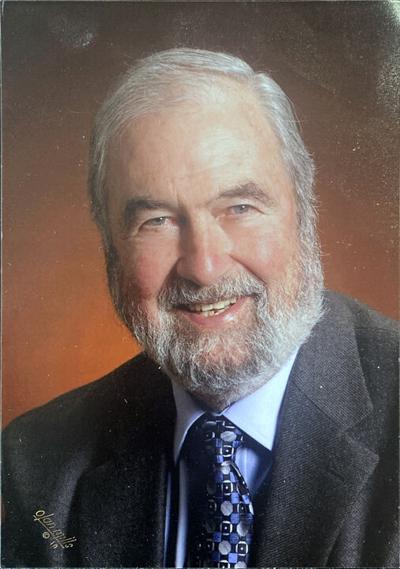
Roger Summit, innovative contributor to the technology of electronic search engines and 50-year resident of Los Altos Hills, died June 7 at age 95. He and wife Ginger moved to The Forum in Cupertino in 2024, where Roger organized jazz concerts and was an enthusiastic player of low-stakes poker. Down-sizing forced him to give up his concert grand in favor of headphones and a Spinet, but he practiced American Songbook standards on the piano daily. He recently gave Forum residents a demonstration of the cycle of fifths, the chord progressions behind many jazz tunes.
While nearly everyone knows about Google, only people familiar with the development of search engines know about Dialog, an idea, then a company Summit founded while working at Lockheed Missiles and Space Administration in the 1960s. His concept enabled anyone, anywhere to search large databases using only a phone line. The strength of the invention can be measured when one considers that Dialog was first tested by Lockheed on a contract with the National Aeronautics and Space Administration. Before long Dialog was in demand by government agencies, corporations and individuals, worldwide.
Dialog continued to add databases and computing capacity until it outgrew its Lockheed facilities. By 1981, Summit’s idea was spun off as DIALOG Information Services, Inc., a wholly-owned subsidiary. In 1988 Lockheed sold the subsidiary to Knight-Ridder for $358 million. While Summit continued as CEO until his retirement in 1992, the company, still in existence, changed hands several times.
Recognition of Summit’s achievement became more public in 2019, when the Institute of Electrical and Electronics Engineers added Dialog as a Milestone. The Milestone program recognizes unique technical achievements that benefit humanity. Dialog shares a list with innovations such as development of computer chips, fiber optics, bullet trains, Moore’s Law and bar codes.
Summit grew up in Michigan, but an early glimpse of California set his sights on the Golden State. A Naval ROTC scholarship allowed him to choose Stanford University. He graduated with a degree in psychology in 1952. After completing his military service, he returned to Stanford for a masters in business management and a doctorate in management science. Summit’s timing was perfect. On campus and off, people were talking about computers. Summit took a job as a summer intern at Lockheed in information processing. The path to Dialog had opened.
In private life, music was a through line. Summit played trombone in dance bands during high school and college. In retirement he played with the Daddios Big Band at De Anza Community College and the Mt. View/Los Altos Adult School Orchestra.
Sailing became a passion. He gave Ginger a surprise wedding gift of a 30’ sailboat, and they spent their honeymoon in the Sacramento River Delta learning to sail. As they traveled the world on behalf of Dialog, the couple chartered boats and sailed in the Caribbean, South Pacific and Europe. Summit even tried commercial salmon fishing with a partner in Half Moon Bay. His love of sailing prompted purchase of a remote cabin in British Columbia, where he spent summers until the effort of sailing became too great.
Summit is survived by his wife Ginger and their children Jennifer Summit Firth and Scott Summit and three grandchildren —- Michael Firth, Ada Firth and Dashiel Summit. Roger also leaves his brother Roland of Los Angeles. Plans for a celebration of life are underway. Gifts in Roger’s memory may be made to the charity of your choice or to the California School of Music and Arts in Mt. View.
The online search world lost one of its pioneers, Roger Summit, on 7 June 2026
Roger Summit, founder of Dialog Information Services (aka Dialog), paved the way for automated, interactive information retrieval that defined online searching some 25 years before Google existed.
In his mid-90s and still in good health, Summit was hit by a car at The Forum, a retirement community in Cupertino, California, where he lived, and taken to Stanford Hospital. He did not survive the accident.
A Stanford University graduate (BA,MA, and PhD), he joined Lockheed Missiles and Space Co. in 1960 and began work on what would become Dialog in 1968, thanks to a contract from NASA. Other contracts followed, allowing Dialog to launch commercially in 1972. It was spun off into a wholly-owned subsidiary of Lockheed in 1982 with Summit as president. After several ownership changes, including Knight-Ridder, MAID, and ProQuest, it is now part of Clarivate.
He was interviewed by Susanne Bjørner and Stephanie C. Ardito in part 4 of “Online Before the Internet: Early Pioneers Tell Their Stories” in 2003. A full biography is on Wikipedia.
Summit was a long-time supporter of the Association of Independent Information Professionals (AIIP) and was still active, participating on a panel discussion at the virtual AIIP symposium only a few months before his death.
He received many awards over his career, but was most proud of the 2019 IEEE Milestone Award for Dialog. The plaque can be seen at the Computer History Museum in Mountain View, California. The video of his acceptance speech is here.
He was also a talented musician, playing piano and trombone. A video of Geoffrey Sharpe and Summit playing a duet during Covid is here .
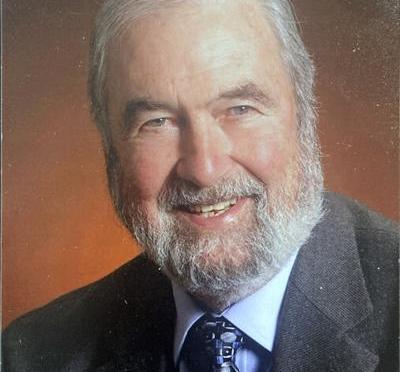
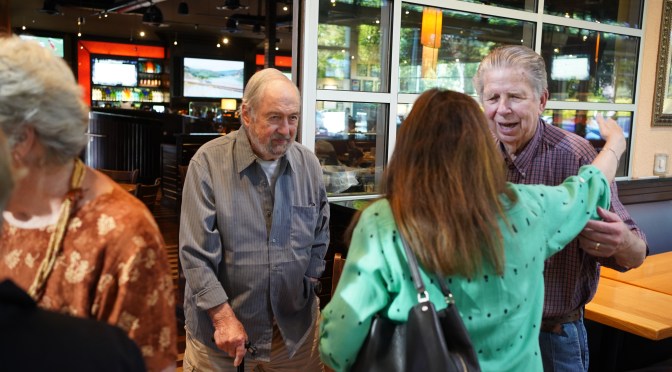
Roger at DIALOG-X meeting
Choosing the name Dialog was prescient, reflecting his vision that effective search wasn’t a single query but an iterative conversation—a back-and-forth between searcher and system to clarify and refine a query, which is now embedded in the newest versions of AI searching. Summit built the foundation upon which today’s online search systems stands. His legacy endures in every search box we use today and in the community of information professionals he influenced. RIP Roger.
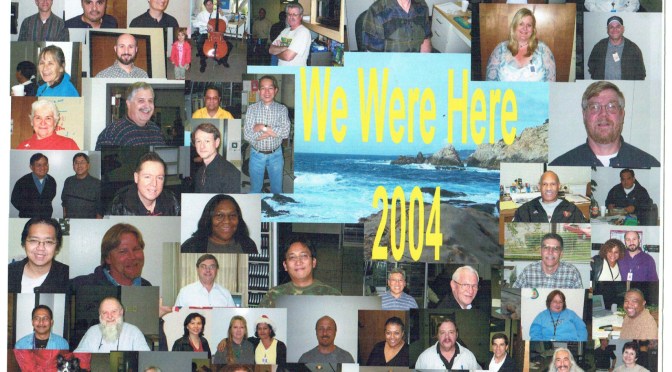
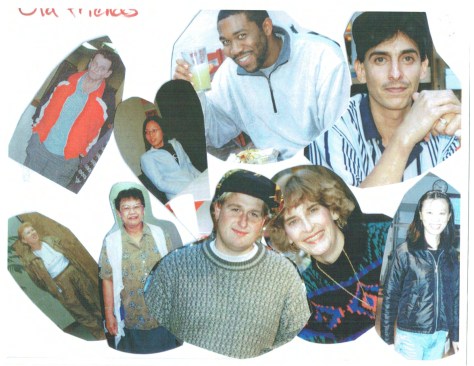
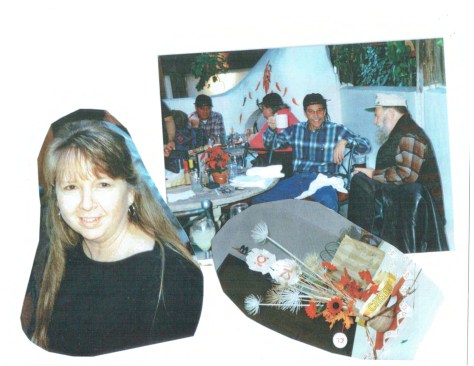
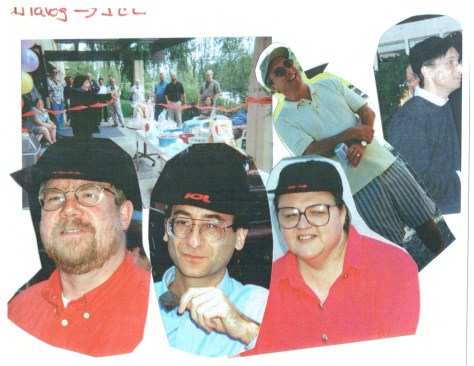
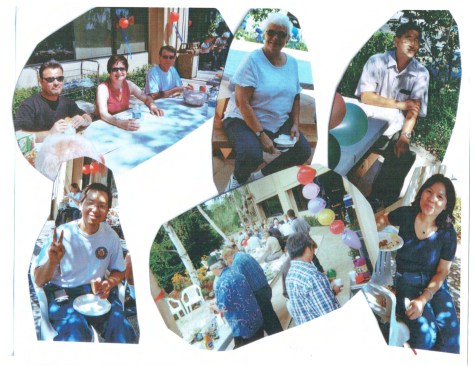
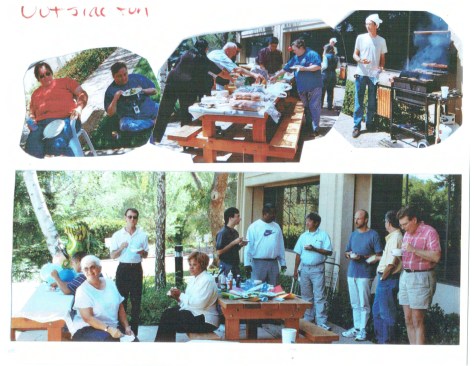
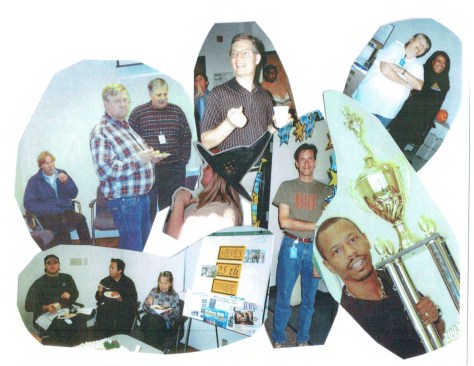
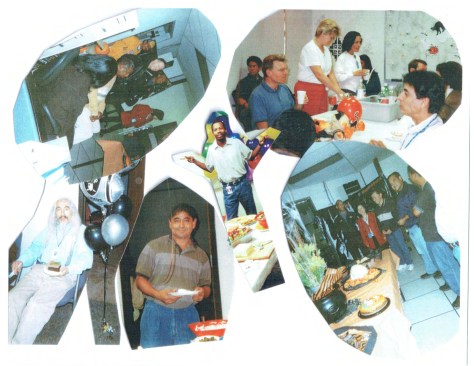
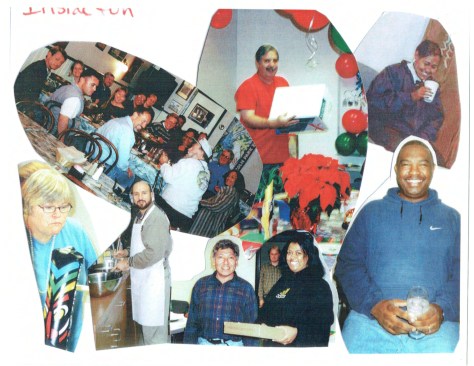
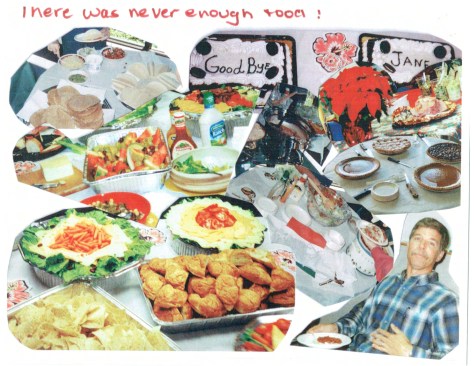
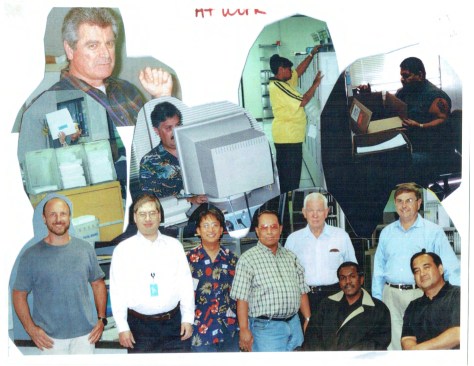
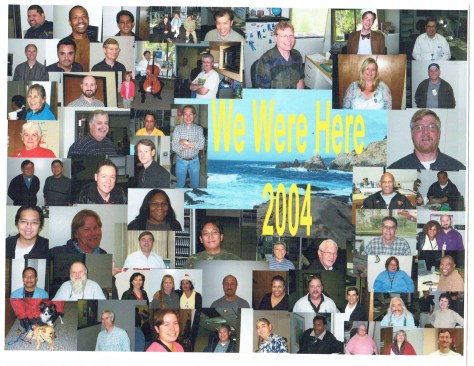
Editor’s Note: A DIALOG-X member, our employees mailing list, Christine Lewis, sent me via mail some older DIALOG documentation items, and old group photos. I am still working on the docs, but I extracted 12 photos from her PDF, and posting here now. Enjoy! If you see yourself or friends, please drop a note or comment to let me know. –DrWeb, Editor, ex-DIALOG Webmaster
A professionally produced video containing interviews with Mel Day (NASA), Lee Burchinal (USOE), Bob Donati (Dialog), Roger Summit (Dialog), Jeff Pemberton (Online, Inc. CEO) and Reva Basch (AIIP). The Q&A traces Dialog development from its start in 1965 to the state of information access in 1997 with some comments on the future. Several quips from this video were taken for inclusion in the Microsquash video.
Producer: Susan Prather Asst. Producer: Sharon Fitzpatrick Interviewer: Ann Caputo





 DIALOG History